Use case
Stop the action
Use where preventing a behaviour is the key objective.
Use prohibition signs where the message must stop a specific action before it becomes a safety or operational problem.
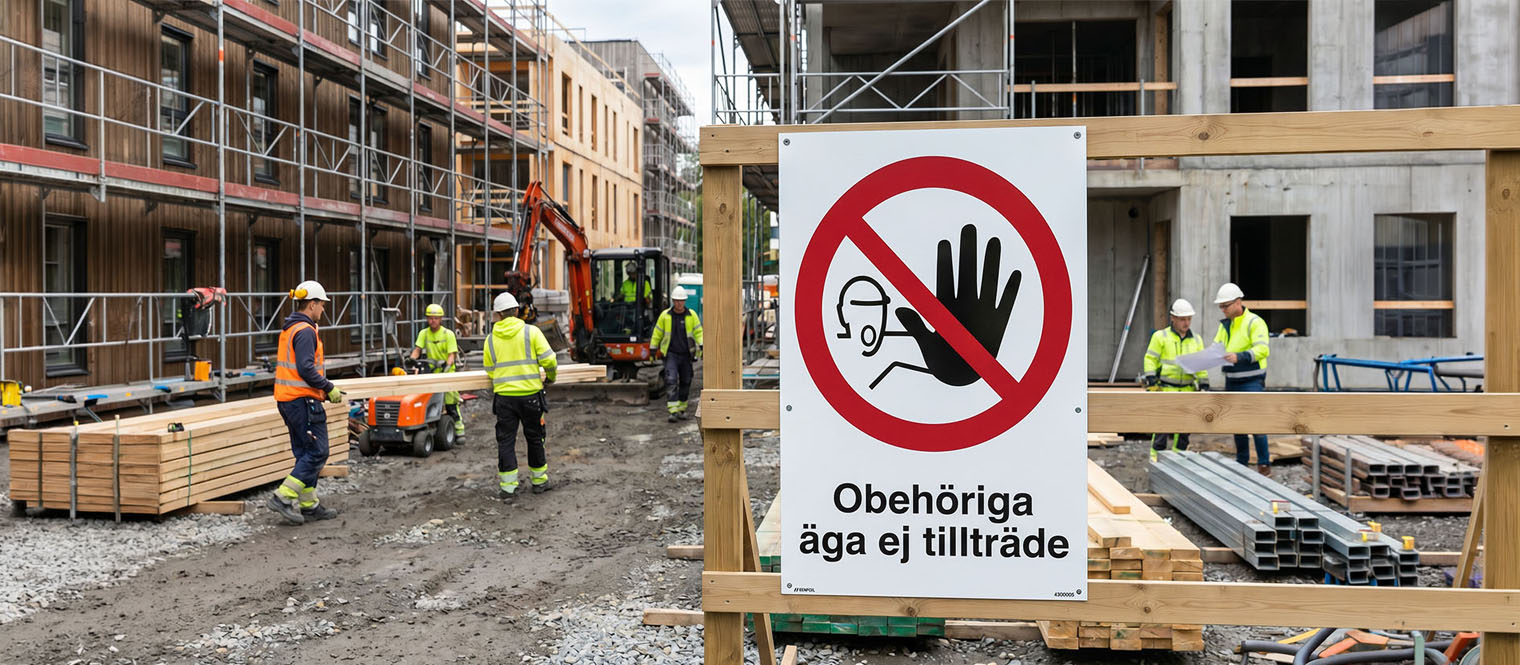
Prohibition signs are used where the message must be unambiguous: do not enter, do not smoke, do not operate, do not proceed. This family fits when the primary job is to stop a specific action.
Which symbol applies follows from the action being stopped. What the sign is made of follows from the site: the surface it mounts to, the cleaning it will meet, and whether the boundary still has to be readable when the lighting fails. Those are two separate questions and it is worth answering them separately.
Standards
Prohibition signs are the red circles with a diagonal bar: ISO 3864-1 fixes the shape and the safety red, and ISO 7010 registers the symbols inside them under P-codes. The bar is what makes the message negative, which is why the symbol underneath is never modified to carry the negation itself.
The registered safety signs. Symbols are reproduced as registered, not redrawn.
Safety colours, geometric shapes, and the relationship between viewing distance and sign size.
The design rules a graphical symbol is drawn by, including one that is not in the register.
Classification, performance and durability: material class, environment, service life and the test behind it.
Use where the first job is hazard recognition rather than forbidding an action.
View categoryUse where the message must require a specific action rather than prohibit one.
View categoryShare the restricted action, the location, and whether the sign belongs to a wider standard-led package.