ISO 24409-1
Design principles for shipboard safety signs, fire control plan signs, safety notices and safety markings
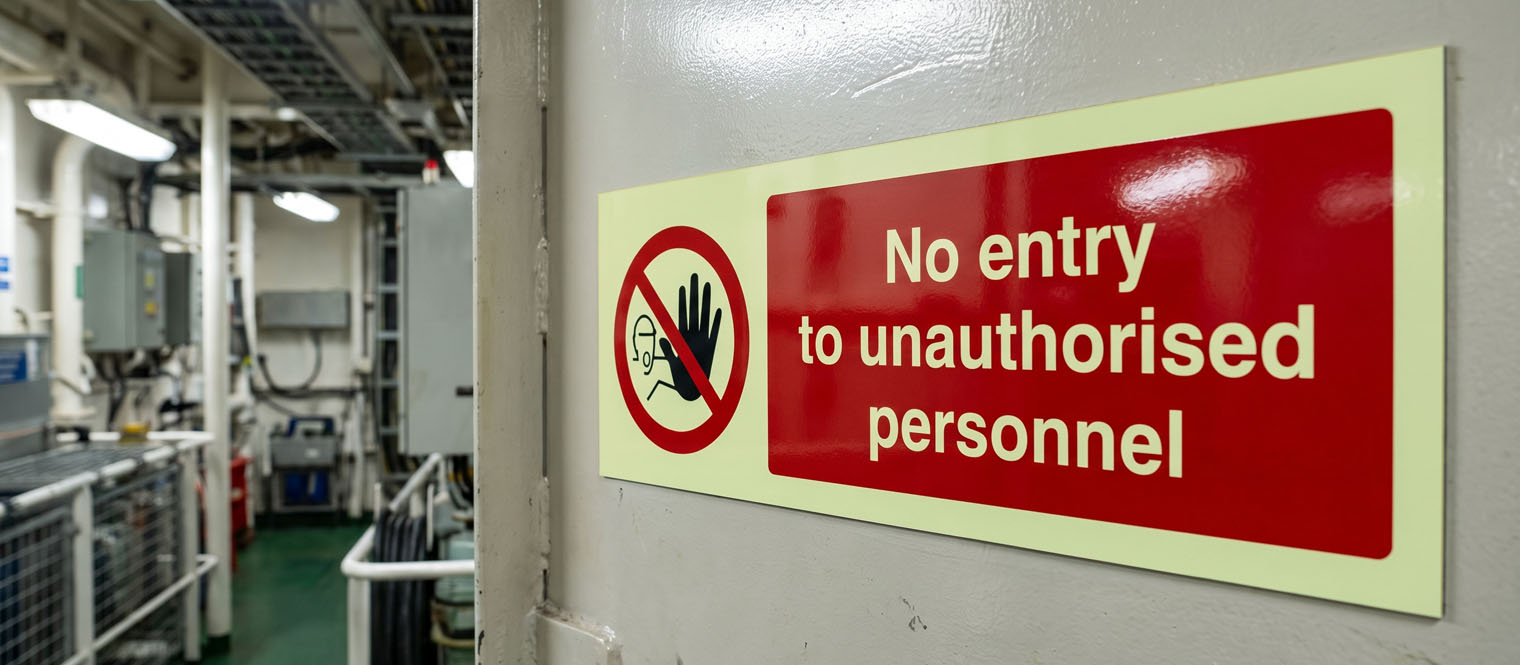
Marine prohibition signs state what is not permitted in a space or at a particular item of equipment, giving crew and visitors a clear instruction before they act.
The location defines the boundary of the message.
Smoking and naked-flame restrictions need to be visible before someone enters the affected area. Other messages may concern photography, mobile devices or activities on a working deck.
The wording should identify the actual restriction. A notice covering a room needs a position associated with that entrance, while a restriction applying only beyond a certain point needs a clear boundary.
Crew-only and no-entry messages distinguish spaces that visitors or unauthorised personnel must not enter. These can include machinery rooms, working decks and other controlled areas.
Where entry depends on permission, the sign should reflect that arrangement. A door name identifies the room, while the access notice explains who may enter it.
A prohibition beside a machine or control addresses the action someone is about to take. It can concern starting equipment, switching a system or using an appliance without authorisation.
Temporary restrictions during maintenance may be communicated with tie tags attached to the relevant item. Permanent prohibition signs address the normal arrangement. Keeping those roles clear prevents a general notice from being mistaken for the status of a particular job.
Standards
ISO 24409-1 covers how shipboard signs are designed; ISO 24409-3 covers where they belong and how they are used together.
Design principles for shipboard safety signs, fire control plan signs, safety notices and safety markings
Code of practice: where signs belong on board and how they are used together
Smoking and naked-flame restrictions, no photography and no mobile phones, crew-only and no-entry messages for machinery rooms, working decks and other controlled areas, and prohibitions on the use of particular equipment.
Where the boundary of the message is. A notice covering a room needs a position associated with that entrance; a restriction applying only beyond a certain point needs that point marked. Placed loosely, the sign leaves a reader unsure how far it reaches.
ISO 24409-1 covers how a shipboard prohibition sign is designed and ISO 24409-3 covers where it belongs and how it is used together with warnings and mandatory instructions.
A permanent prohibition sign addresses the normal arrangement. A tie tag communicates a temporary instruction attached to a particular item during maintenance. Keeping the roles separate stops a general notice being read as the status of a specific job.
No. DENFOIL is supplied through distributors, who quote the specification and handle the order.
Tell us which restrictions apply and where the boundary sits. A distributor quotes the specification.